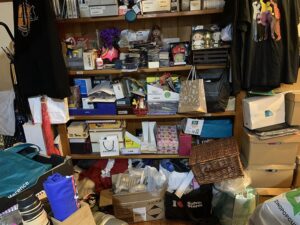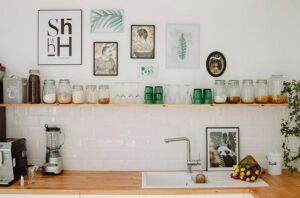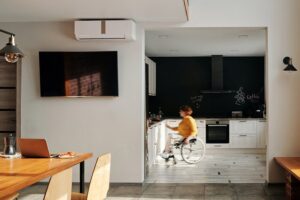

Behind the scenes of every seemingly perfect home, lies the stuff of life. Mess, stress, busyness and imperfection.
Likewise, just out of the frame of every Pinterest-perfect photo, there is a pile of stuff swept off the bench. Items that don’t match the same-sameness of the ‘organised’ homes in our algorithms, items that are unattractive or in need of attention.
The Pinterest-perfect images are merely aspirational stage sets, created for an escapist audience. They are curated for a single photograph, not a family that needs nappies changed, meals cooked and groceries plonked somewhere while the dog is walked.
When every shelf is an artful moment containing three coffee-table books and a candle, there is nowhere to put the stuff of life, including:
- unopened mail
- unwashed dishes
- a fridge full of sticky notes
- a half-eaten breadstick
- a bag of clothes that need mending
- car keys and receipts in the fruit bowl
- a chipped mug we are attached to, with pens sticking out of it
There’s a subtle psychological toll in measuring our real-life home against spaces that were meticulously curated, styled and photographed before a single person walked through the door. It becomes another stick to beat ourselves with, another cultural milestone we can’t achieve. We feel less-than, when our only failing is to swallow the lie that perfection is attainable.
And importantly, Pinterest-perfect homes are often dysfunctional.
Decanting all your staples into matching containers can mean you lose the best-before date and full list of ingredients. It’s an attractive look, but demands your time, space, money and energy to set up and maintain.
Colour-coded books can also be a visual treat, but if that system creates friction in finding a book then it’s no good for you. My algorithm recently served me a trend which displayed books with the pages facing out, just to achieve a neutral, paper-coloured backdrop. Pinterest-perfect, or Pinterest-silly?

As householders, our needs, habits and hobbies change all the time, so even if we can achieve some kind of ‘perfection’ it will be fleeting. We need systems that live and breathe along with us, not static postcards of aesthetic bliss.
A truly functional home has wear on it and there is beauty in that – a couch with pet hair on it, a pantry door with height marks pencilled in, sauce-stained recipe books that have nourished friends and family.
That’s not a flaw. That’s a house that’s been loved and used.